It’s Back!

I must have been asleep in the past six months or so because I just found out that it’s back, for sale right now, and it is pretty darn good.  Hewlett-Packard have done a wonderful thing and have put into production a replica (or reproduction) of the wonderful HP-15C calculator.  The calculator that many credit with getting them through engineering school and then through their careers.  It is, to my mind, the finest engineering calculator ever produced.

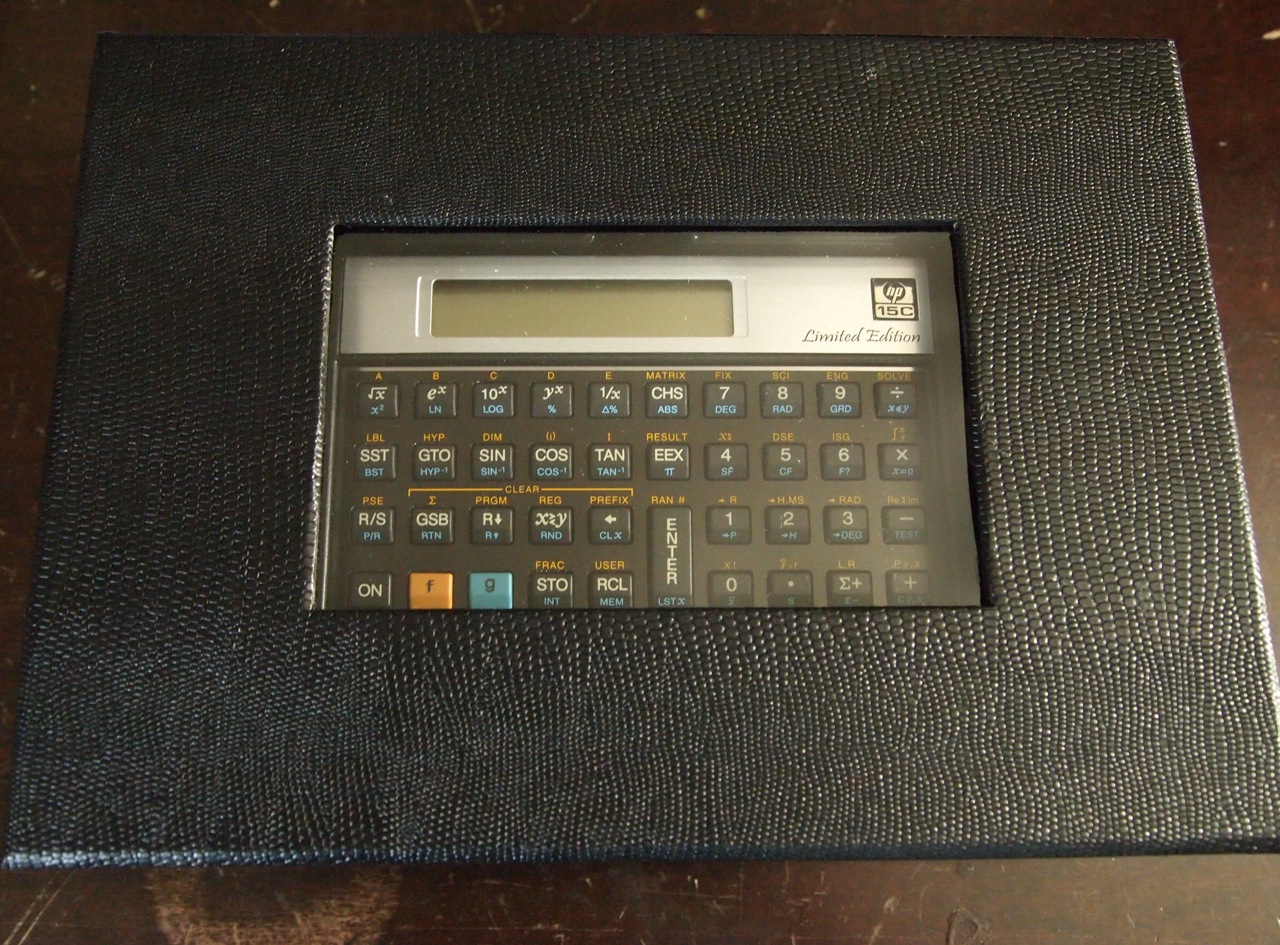
Though made in China now, rather than the US or a few other countries like the original HP-15C, the reproduction, called the Limited Edition by HP, seems very well made and almost identical to the original.  It comes in a nice presentation box along with a printed owners manual that seems to be a reprint of the original.
Image

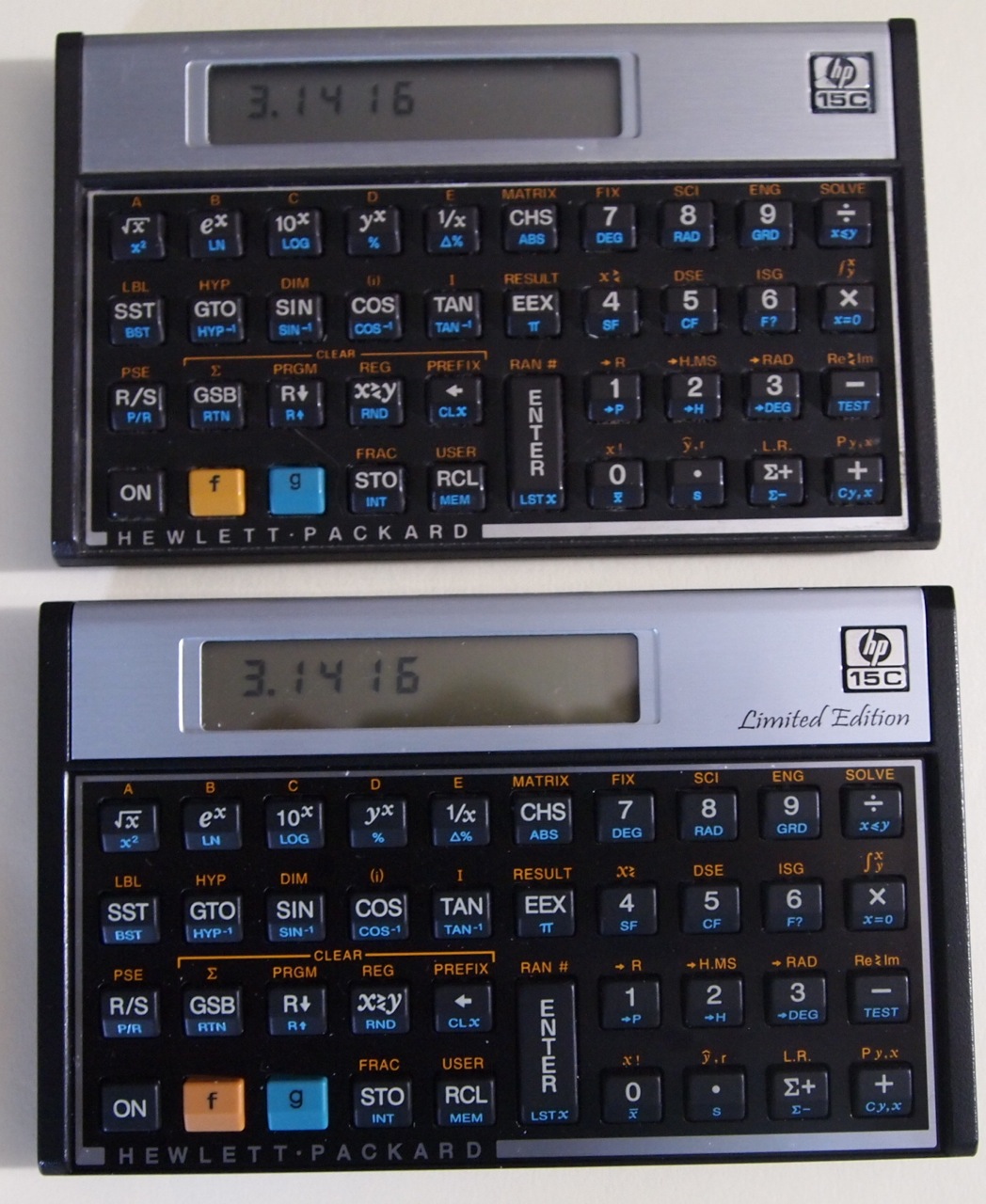
Here is the new one next to an original in good condition.  The only main visual difference is that the new one’s screen has a greenish tint to it while the original is gray (that doesn’t really show in the pictures and it is not a big deal).
Image

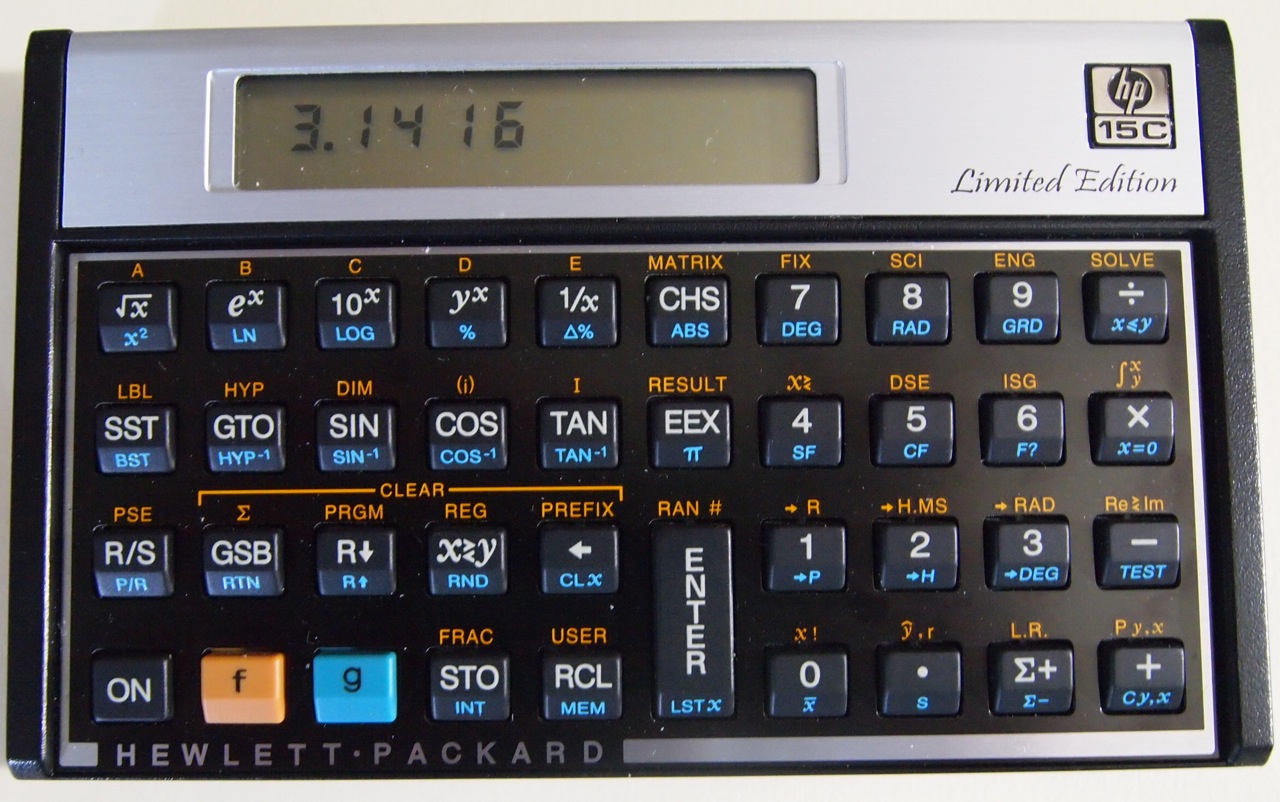
In operating the calculator, you do notice a slightly different feel with the keys.  The LE has slightly flatter keytops and the texture is slightly rougher – that might be just because I am comparing it to an original 15C that has had some use in its 30 year life.  The f and g keys also feel a bit wobbly compared to the original but they don’t seem to be as bad on mine as some people found on the first batch that came out.  The key action is just as good, or maybe even a little better, than the original.  And that is saying a lot.  It is a wonderful calculating experience.
Image

As far as I can tell, the LE does everything the old one did, in the same way (except for the diagnostics check), and, because of a new processor, does it much, much faster.  I guess there was some price gouging in the Fall, but now they seem to have settled down some.  Amazon has it for $129.99, but you can order directly from HP (http://www.shopping.hp.com/webapp/shopping/product_detail.do?storeName=storefronts&landing=calculator&category=HP&a1=Type&v1=Scientific&product_code=NW250AA%23ABA&catLevel=2) for $99.99 with free shipping.  I got two and they arrived in just a couple of days.

Any of you who lost their 15C, or want to gently retire theirs, or who always wanted one but couldn’t afford it at the time (me), I highly recommend purchasing an LE.  I think it is still the best calculator an engineer can have at his side that can also fit in his shirt pocket.

By the way, this is a great site for all HP calculators:  http://www.hpmuseum.org/  The forums are active and filled with interesting calculator nerds – a lot of engineers, in other words.

Motivated Reasoning

Motivated reasoning is one of the easiest traps for an engineer to fall into.  This pleasantly oxymoronic term can be considered as an extreme case of confirmation bias.

So what is it?  I see motivated reasoning as the practice of allowing emotion to creep into the engineering process — usually through the emotion-based evaluation of data or calculations leading to an emotion-based decision.  It is a matter of putting more credence into your feelings than in the data at hand.

Now this doesn’t mean you always have to be Spock rather than Kirk, but one needs to understand that all decisions are, to a certain extent, emotional, but that one can’t dismiss engineering facts just because they don’t fit your emotional needs.

A case came up recently that illustrated this tendency perfectly.  A report generated by the best of the field offices completely disregarded a previous report from another office.  Why?  Because if that older report was true, it would mean more work and expense.  By disregarding the old data, they could avoid a lot of work and cost.  Trouble was that there was nothing really wrong with the old data.  Certainly nothing that would support tossing out the whole report.  To rationalize their position, they harped on some small errors and inconsistencies.  Their position became an emotion-driven one based on external pressures to reduce cost and schedule impact.  The correct, data-driven position was overridden.

We corrected this situation but it illustrates how easy it is, even for first-rate engineers, to fall into this trap.  Experienced engineers can sometimes go with their gut (emotions) and succeed, but when data and calculations are available, go with the math every time.  Sort of like flying in the clouds: trust your instruments and not the seat of your pants.

Pride

Remember back in the day when you could spot an engineer (or science geek) from a block away because of the tell-tale calculator on their belt?  Or going a bit further back, how they wielded their slide rule?  Okay, so neither were cool (why is wearing an iphone on your hip nowadays cool but a calculator isn’t?), but they were objects of some pride to the engineers.  A symbol, if you like, of somebody embracing math, technology, and applied science.  And of course the more complex the instrument, and the better you knew  how to use it, was the basis of some sort of hierarchy in the ranks.  Or, at least, something that earned you respect from your peers.

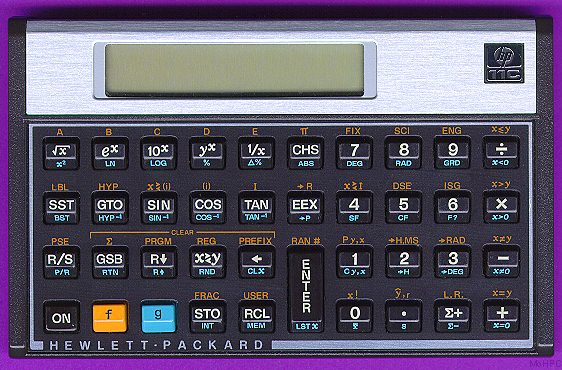
As a student I couldn’t afford the pinnacle of calculators, the HP-15C.   Or any of the HP products which, at that time, were the best you could get.  I had to make do with a very capable, if a little quirky, Commodore scientific calculator and a backup K-mart special.  I cared not for the TI-55 with their sticky keys.  Since then I’ve collected calculators here and there based on design and features and at work I have about four or five hanging around; more at home taking up a drawer.  My goto ones are a new HP-35S (https://badengineering.org/2009/09/23/product-review-hp-35s/) and an old HP-11C I recently purchased on eBay for more cash than I’m willing to admit to you.  The 11C is still, as far as I’m concerned, the second best calculator ever made and now, thirty years later, it is still a joy to use.

I guess I still think that these calculators are things of great usefulness and pride for an engineer.  And I guess that’s why it bugs me when I pass my coworker’s desks and see four-function calculators sitting there.  Have they no pride?  No sense of embarrassment that they are using a two-dollar POS that never could have gotten them through the first month in engineering school?  No desire to use or even play with the friend of the engineer?

When I asked one of them about it, he replied that he’s just a manager now, not an engineer (then what is he doing in an engineering position?).  Well, not for me.  My engineering blood still runs strong and I still carry my HP to meetings and proudly have them on my desk within easy reach.  It’s still a matter of pride to me (and usefulness) and I don’t foresee ever giving them up.

Anybody know of a belt holster for the 11C?

(Check out the HP-11C tee-shirt in the store —–>)

Tenets of Engineering Skepticism

A couple of my old posts talked about engineering skepticism (here).  I’ve been thinking more about it and came up with the following four tenets of ES.  These would be used first to test a claim, process, or machine before it could be considered useful to the engineering world.

Four tenets of Engineering Skepticism

1. The device, process, or method must be effective. It must be clear that there is a real effect without relying on advanced statistics. If the results are less than 25% better than chance (guessing), it doesn’t pass the ES test and can be dismissed as being useful to the engineering world.

2.  It must be reliable. This means that it should work the way it was intended in real life conditions and with any trained operators. If it relies on the weather, the aura of the user, or how the stars are aligned, then it fails the ES test and can be dismissed.

3.  It must be repeatable. If it is used in the same way in the same environment multiple times it should provide the same or very similar results. This should hold true even when done with different operators. For instance, if five different dowsers go through an area and give five different results, the method does not pass this ES test and can be dismissed.

4.  And it must be teachable. If it depends on some peculiar talent or right of birth then it is of no use to engineering. Knowledge must be able to be recorded and passed on to new generations of engineers.

Failure to pass all of these tenets does not necessarily mean that the device or method is fake or false, but that it is not dependable or of enough rigor to be useful to engineering. Until it meets those tenets, any engineer worth his salt will dismiss these devices or claims.

Post a comment if you think any of this makes sense, or doesn’t.