Hating “Perfection”

This morning I went on a cold photo walk equipped with two cameras, both built by Olympus (okay, one by OM Systems but just about the same). The cameras are many generations apart and newer one is demonstrably better than the older one. So how come I hate the new one and love the old one?
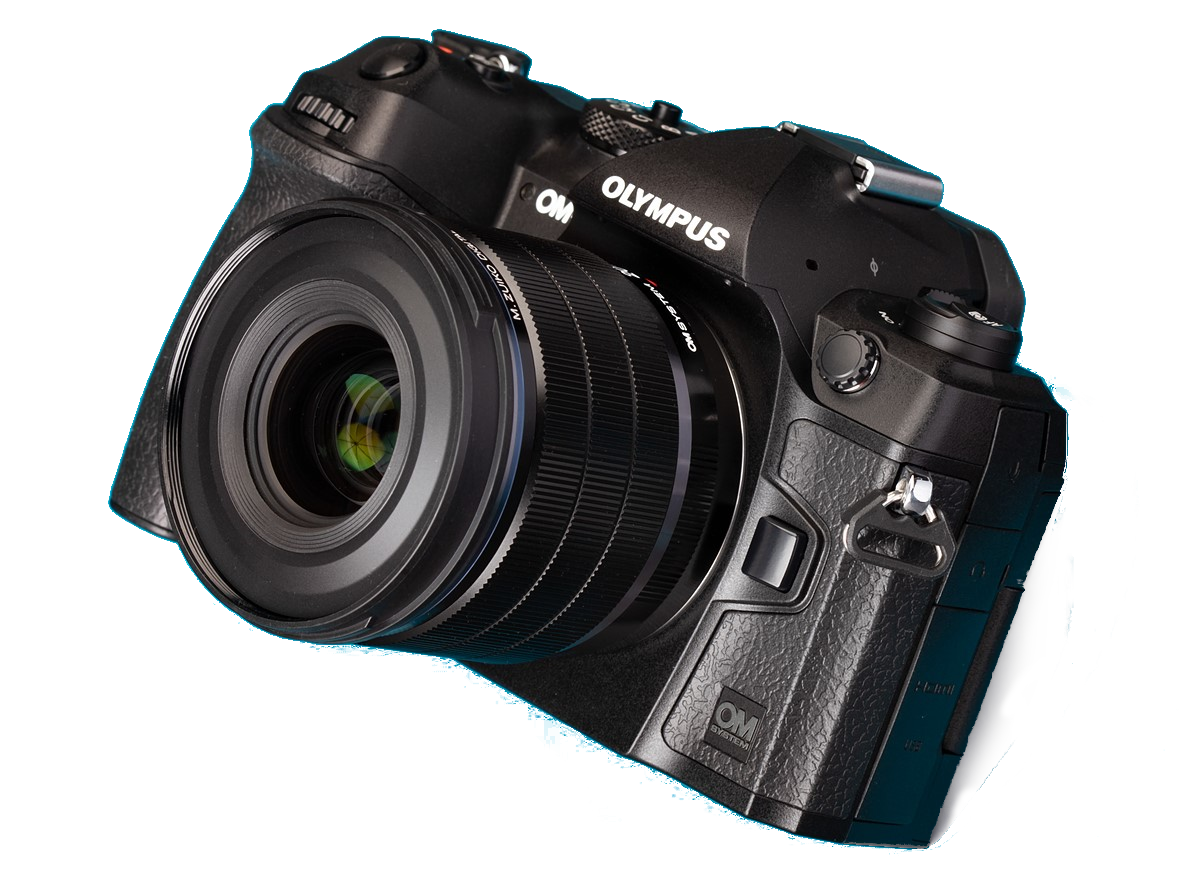
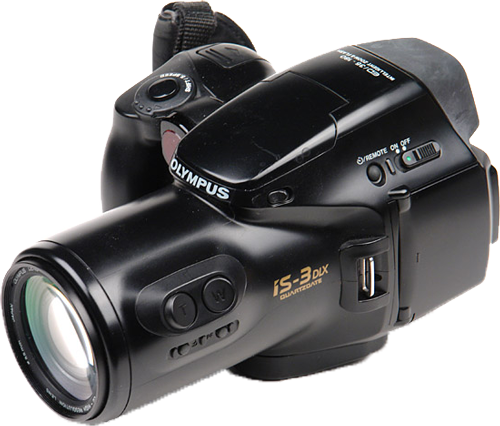
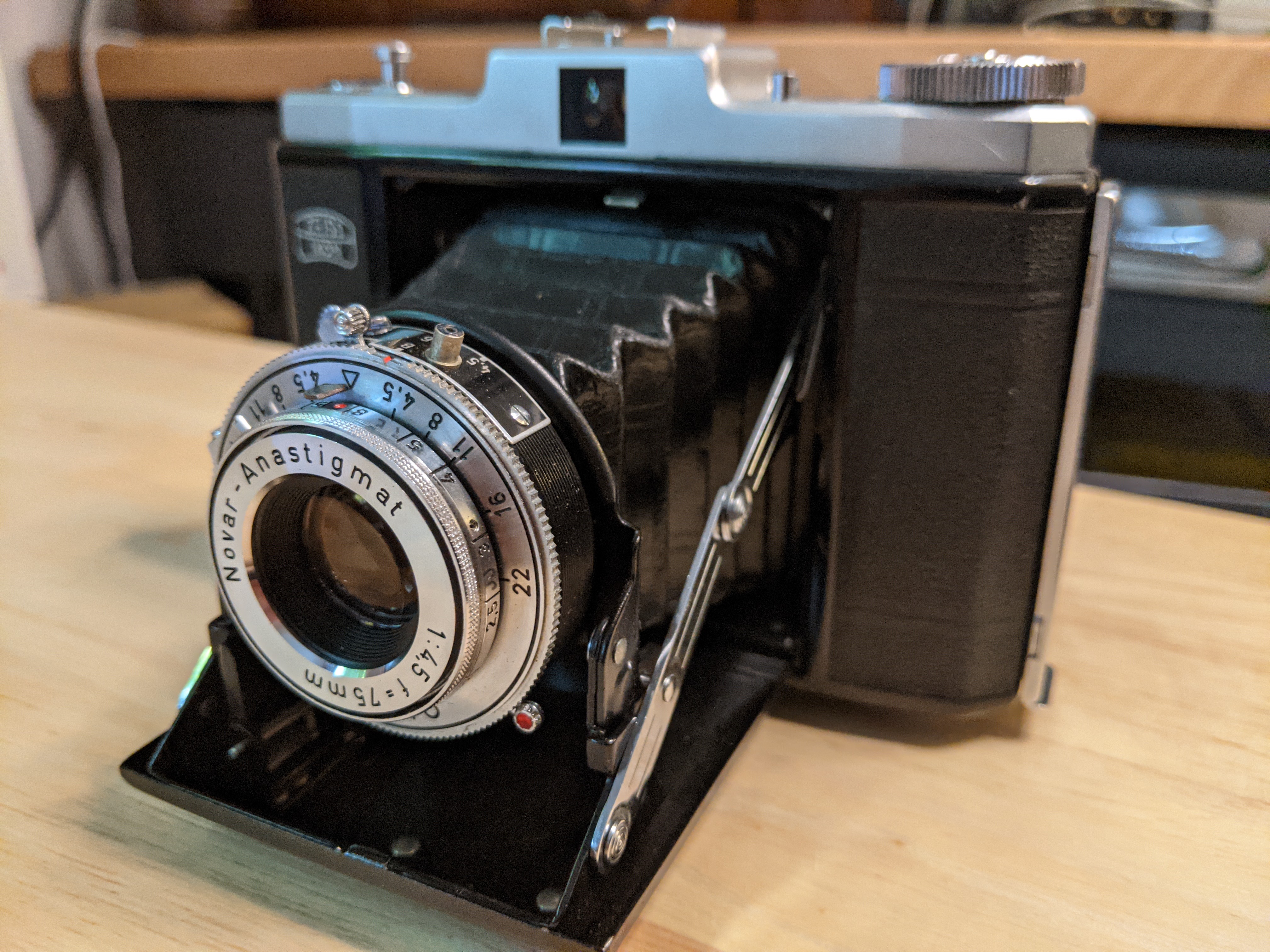
On the left is the amazingly capable and complicated OM Systems OM-1 from 2022. This is a interchangeable lens digital camera with a multitude of advanced features. On the right is the Olympus IS-3 DLX “bridge” camera from 1992. This film camera has a fixed zoom lens, a very limited number of features, and very different ergonomics than today’s cameras.

Picture Quality: Let’s get this out of the way right now. The OM-1 will produce better quality pictures more often than the IS-3 will. But the IS-3 is no slouch (in good light) as you can see below on the right. Keep in mind the different lighting for each photo.


So why do I love the IS-3 and dislike (hate, sometimes) the OM-1? Why do I hate what many consider close to perfection? Because I am human. And, perhaps, because I am an old human. I think for people of my generation (yes, boomers) there is a sort of uncanny valley where technology is enjoyed up to a certain point of complexity and then it rapidly becomes an annoyance and we start to look backwards to simpler devices. The OM-1 is a complex camera and though I like the fact that the camera is capable of doing incredible things (subject detection and tracking, hand held high resolution, star focusing, etc.), none of those things make me want to pick it up and go do photography because I have to deal with all that technology every single time (settings, menus, etc.).

On the other hand, just picking up the IS-3 makes me want to use it. I can just point and shoot, or I can be more deliberate but even then I only have to deal with shutter speed and aperture. The auto focus works okay, for 1992, and the auto focus point stays in the middle and doesn’t wander off into the edges of the frame. [I do wish modern cameras had the capability for locking the focus point]. The camera doesn’t get in the way and lets me concentrate on the composition of the photograph. It lets me enjoy the process of photography instead of the process of setting up a computer to take a picture and then pressing the button like a trained chimp.

I suppose this is just me being fed up with the barrage of technology. My car (9 year old BMW) is another example. The infotainment screen can be retracted into the dashboard so I can enjoy a drive without being told how to drive. Bliss.

I am sure other people would argue just the opposite. So perhaps it is all up to personal choice and preference. Perhaps I have just reached the point where I am willing to sacrifice the perfection of the result (i.e., perfect picture quality) for more pleasure in a more perfect (to me) process.
Jaded

We have become so jaded and so unromantic. What happened to us? Is it the throwaway society? The constant search for the next shiny thing? Or are we just so spoiled that we can’t appreciate simpler things?

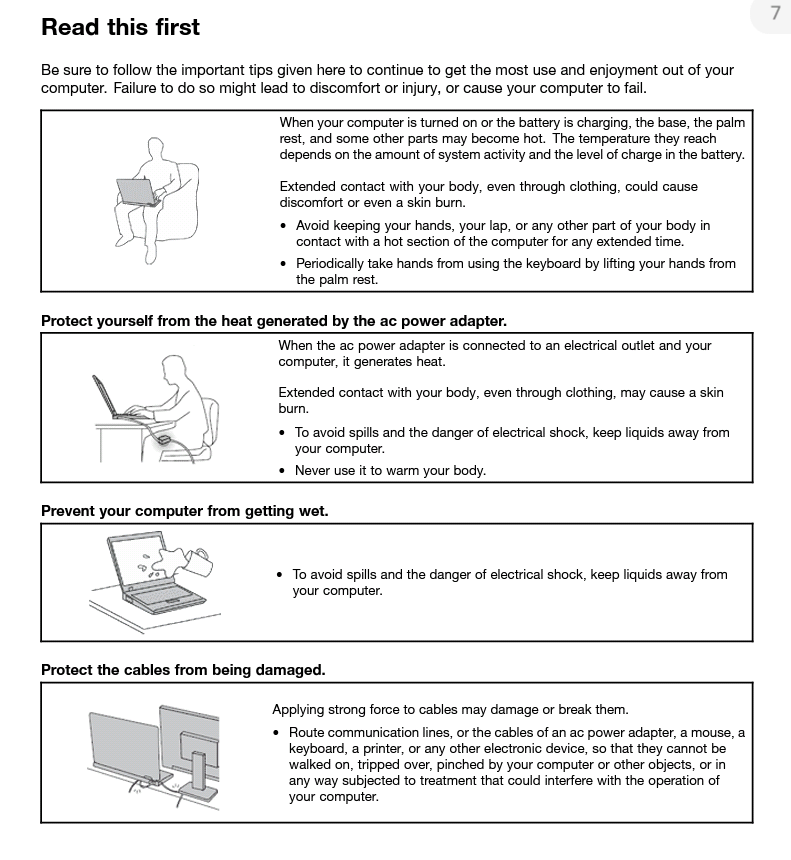
Case in point. Above is the first page of my laptop manual. It goes on like this for many more pages of warnings and cautions. No enthusiasm or even marketing of the product. Just make sure you don’t electrocute yourself and I guess you’ll like using it?

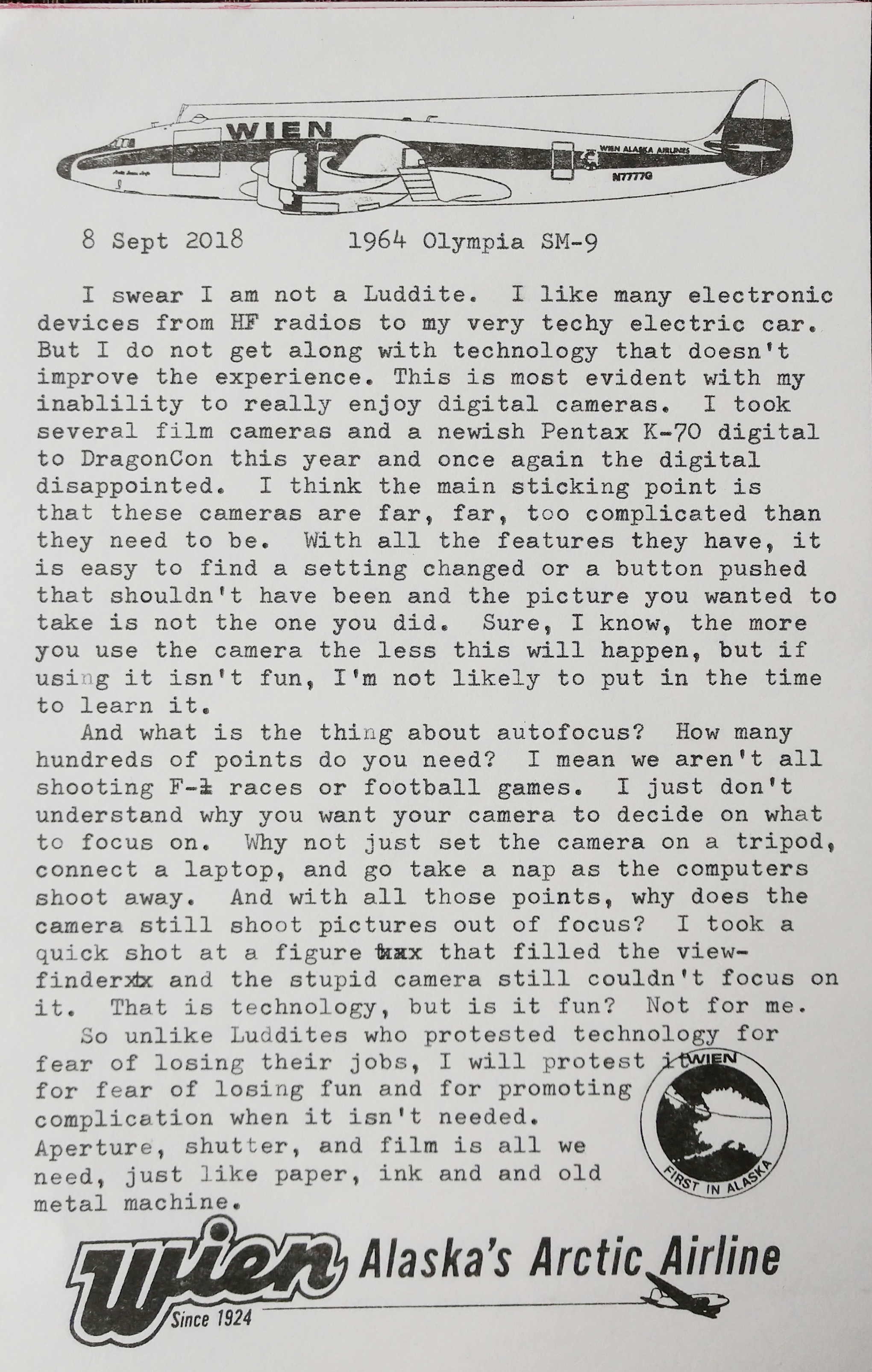
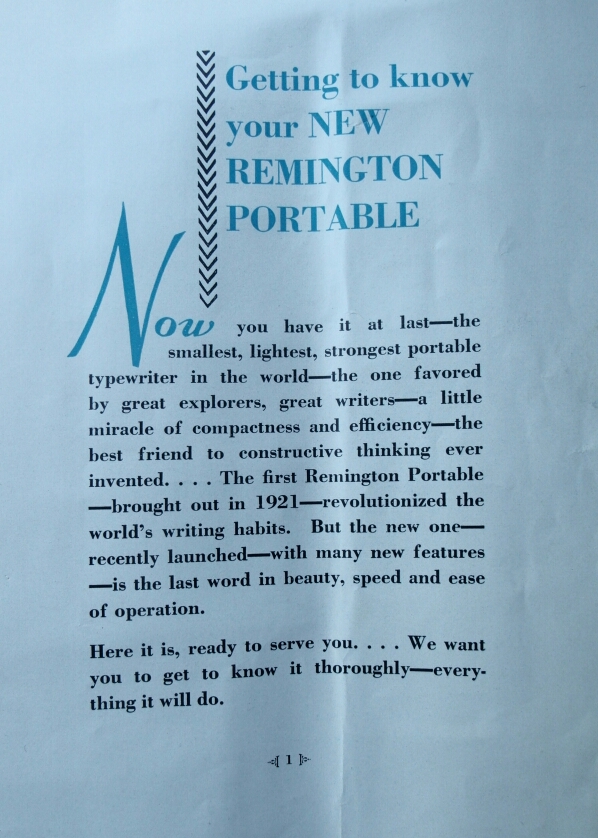
Compare that to the first page of a Remington typewriter manual from 1932.

There you are, using the same device as great explorers and writers. Think how that must have felt. This was more than a writing tool, more than a utensil. It was an object linked to adventure and greatness. And yeah, sure, it was marketing, but it was fun and romantic marketing for a less jaded time.

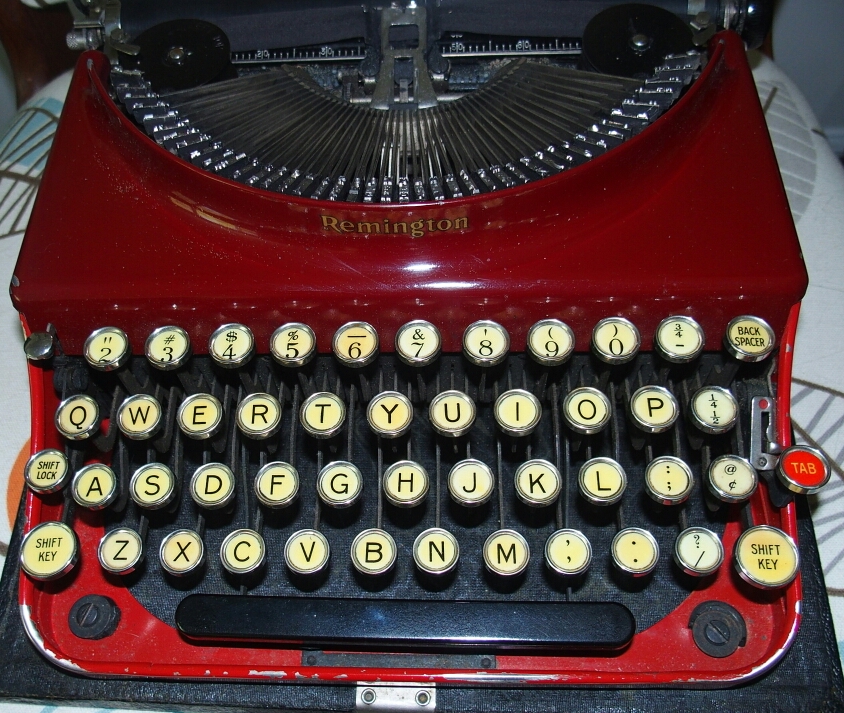
I suppose that’s why this typewriter lasted these 89 years. Who could throw away such a great machine? Besides, it still works great.

I don’t suppose we can ever be cured of our jadedness. Too bad, I think we might have been happier.

Digital has spoiled photography…

…for me.

Okay, before I go any further and to forestall any of you guys poised on the comment button to reignite film versus digital, I will admit that digital is now “better” than film in most cases. I fully admit that my modest digital cameras are amazing devices that can produce amazing results that would be hard or impossible to produce with most of my film cameras. And that is precisely why digital has spoiled photography for me.

Guess how many pages of menus this camera has. Right.

I know people have differing opinions of photography, but for me the goal is not to get the perfectly composed, perfectly exposed, perfectly color rendered, perfectly sharp photograph. Perfection isn’t my goal. And the digital camera builders are obsessed with giving me just that. Sorry, but perfection is boring. As is the constant search for sharpness. And hand in hand with the boredom of perfection is the curse of menus and the realization that you are pointing a lens that is connected to a powerful computer. Essentially the human photographer is relegated to the monkey pushing the shutter button. And if that isn’t quite perfect enough, then the monkey can push a few more buttons and move some sliders in post-production to make the photograph even more perfect.

Easy, right? Well photography, like baseball, isn’t supposed to be easy. It is its difficulty that makes it satisfying and rewarding to do. Because when you get a fine picture out of a film camera, you were the one who did it and you can take most of the credit and pride. You weren’t a monkey pressing a button, you were a photographer composing, calculating the exposure, choosing the film stock, and waiting for the right conditions instead of changing them in lightroom or photoshop later.

So why don’t I just keep using film cameras and not put out a rant like this one. Well, I intend to. But every time I go out with a film camera in hand, even with my most sophisticated film camera, the amazing Minolta Alpha 9, I know that my little compact digital camera could do a better job. And old Uncle Fred with his Nikon D850 can produce something ten times better than that. So that has spoiled photography for me because I can’t compete. And each time I have to make that choice between the easy path with great results or the hard path with lesser results. It is a hard choice that gets harder every time a new fancy digital camera comes out.

So what to do? Well, I will continue to use both as situations warrant. In general, I’ll use digital for color snaps and film for more thoughtful black and white photographs. I’ll play the monkey sometimes and the human being trying to be an artist the other times. But I won’t look for perfection in either case. Perfection isn’t the right goal.

New Keyboard

I know, many moons have passed since I put in an entry here. I hope to rectify that in the future with more regular thoughts posted. I have some new typewriters to test out with typecasts, and a few cameras I’d like to talk about.

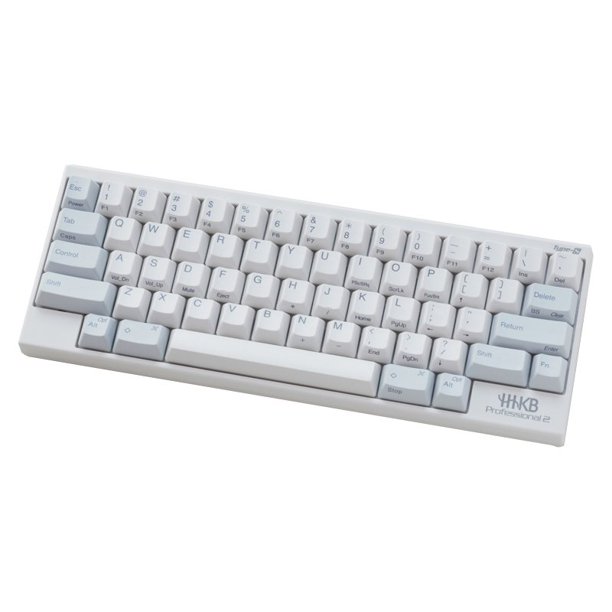
But for today I want to talk about this new keyboard that I just got and this is the first time I am typing on it. My previous keyboard that I have used both at home and in the office was the HHKB Professional 2 which was equipped with Topre type keys and it was a very compact unit. I really liked it and got used to having to use a Fn button to get to up/down etc. functions, but I think something is wrong with it as I kept getting shocks from the USB ports on the back. The keyboard works fine, but something is amiss.

The Happy Hacking Keyboard

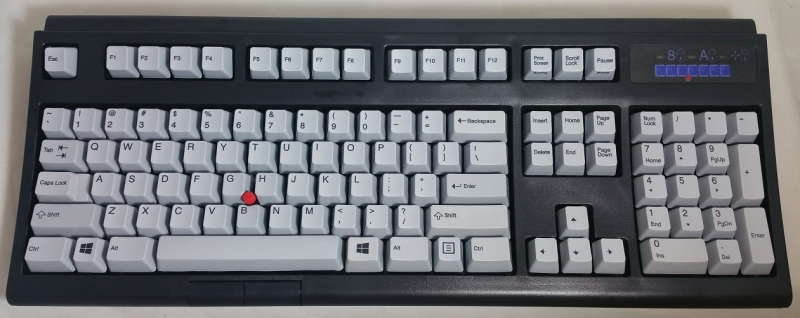
So I did a little research – not as much as I have done in the past – and even got a little sample keyboard thingy with Cherry MX switches. None of which I liked a whole lot. I used my old Unicomp buckle spring keyboard for a while but while I like the touch, I find the extra noise a bit distracting for touch typing – like it had too many clicks for just one keystroke. Besides, the keyboard is huge and didn’t leave much room on my computer desk.

The Unicomp version of the IBM keyboard.

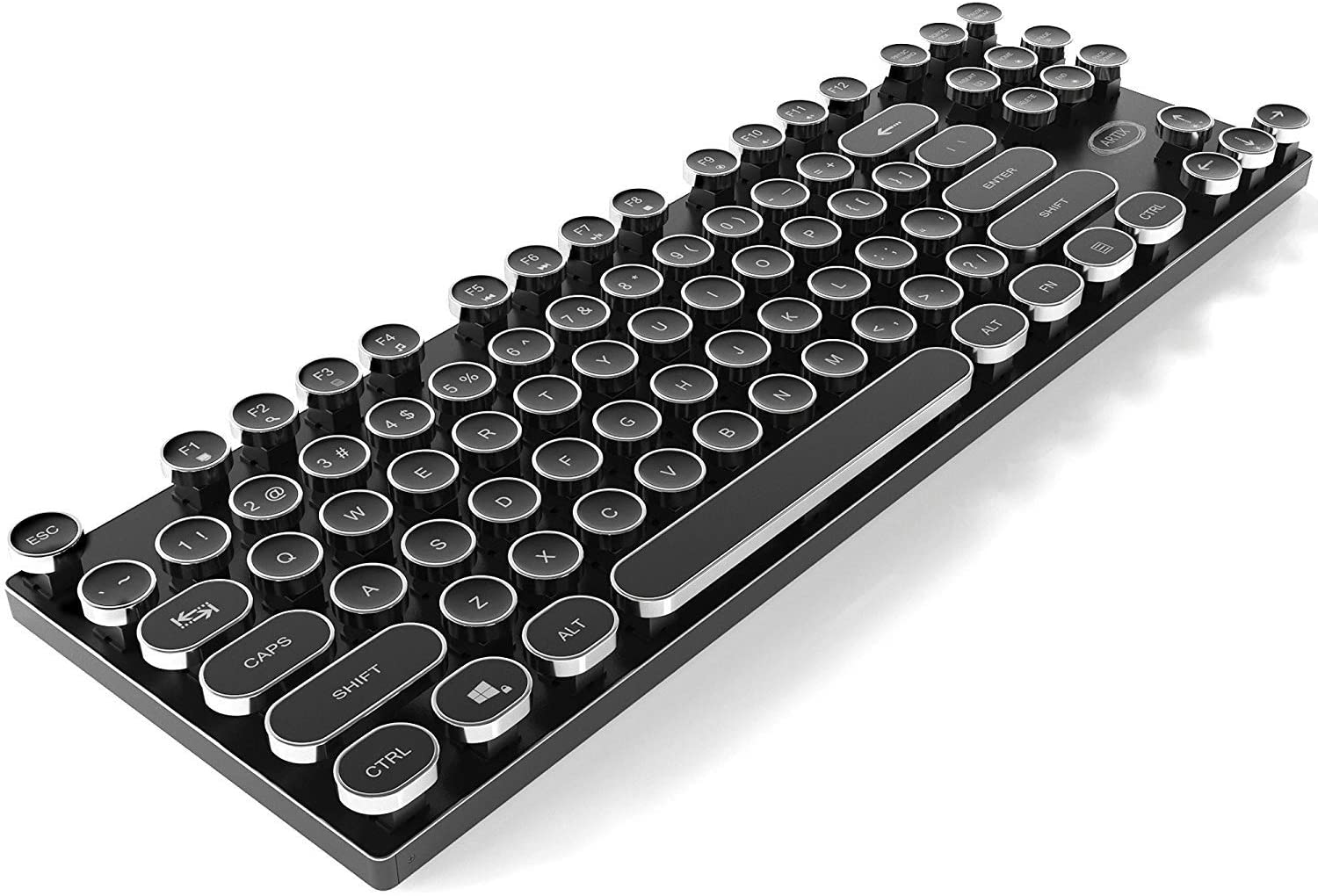
So I thought about a DAS keyboard but then I went to something a bit more retro (with knock-off switches). The Artix Medium keyboard shown below.

I could really do without the LED lights under each key, but I like the retro style and I really like the round keytops that remind me of some of my older typewriters. So far the key tops are fine for touch typing and the rest of the buttons like the shift and return seem to be in good positions for no-looking typing.

The keyboard is wired which I wanted as my Linux box sometimes won’t see bluetooth reliably, and the build quality seems fine. It has a nice heavy base that stays put and it seems to be made of actual metal – the base, anyway. The switches are not, I believe, Cherrys, but they seem fine so far.

And it was under $100 which is nice. I paid about three times that for the HHKB keyboard and while that lasted a long time, I didn’t want to put that kind of money into a new one.

So time will tell, but so far this seems to be pretty good and certainly quick to get used to. And it doesn’t hurt that its looks hearken back to a good old Smith Corona Silent.